
BY OLIVIA VAN DEURSEN
Events Editor
In January, New Jersey Governor Phil Murphy proposed a bill that would ban cell phone use in K-12 classrooms for non-educational uses at a minimum. The initiative aims to reduce mental health concerns and increase productivity.
The bill (S-3695) would require all New Jersey schools to implement a system that would remove cell phones and other personal electronic devices, such as smart watches, from classrooms, school buses, and school events. The potential ban invoked mixed emotions among students. “It’s a complicated issue, and, no matter what, nobody will be happy,” said junior Braelynn Mecka.

Many students argue that cell phones enhance their educational experience by functioning as a backup apparatus when school-issued devices fail. Phones also act as a device to quickly and conveniently access online tools. “Cell phones can be helpful in school because they let students use learning apps, stay organized with calendars and reminders, and contact parents, teachers, or classmates when needed,” said junior Arianna Cabrera.

Others believe personal devices are a distraction and challenge academic integrity. “Not only is it distracting for the students using their phones, but it’s also rude and distracting for others trying to focus and the teachers,” said Mecka.
The bill specifically targets bullying, with those supporting the bill hoping to decrease cyberbullying and harassment. “Cyberbullying could happen outside of school just as easily as during school hours,” noted junior Gianna Lentini.
The bill would also require schools to make exceptions for emergency situations. “It’s important for students to contact parents or get help in emergencies so they can stay safe and get in contact with them quickly if something dangerous or serious happens,” said Cabrera.
Most students disagree with a complete school-wide cell phone ban. “This ban would also unfairly punish students that can balance the time on their phone with the time they need their full attention on their classes,” said junior Alana Phillips. “Some alternative solutions may be for teachers to keep student’s phones, excluding the beginning and ending of class. Another option may be for teacher to make designated time for students to use their phone.”

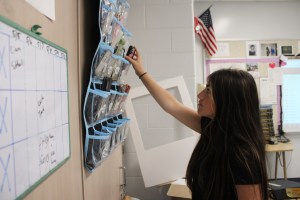
The proposal would allocate 3 million dollars for schools to implement cell phone containment systems, such as locked phone pouches. “A teacher could have students put phones in a phone holder,” said Lentini.
Instead of a ban, some students believe that schools should focus on educating students about moderating phone use and the dangers of cell phone addictions. “Schools should teach students how to use phones responsibly, so they don’t get distracted,” argued Cabrera.
The bill unanimously passed the Senate and currently awaits approval from the Assembly Education Committee. If passed, the bill may go into effect for the 2025-2026 school year.
Posted on 6/4/25
PHOTOS BY OLIVIA VAN DEURSEN
 Knight Life